Lib Tech Apex Orca 153 Review
You want a freeride board that feels light, floats fast, and still snaps hard when you load it. The Lib Tech Apex Orca 153 gives you that mix. You get a directional, volume‑shifted shape that you ride shorter than your usual board. The carbon “Techno Pop” build keeps weight down and pop high. If you chase storm days, love steep lines, and still want to boost off side hits, this board fits. In this hands-on review, you’ll see how the Lib Tech Apex Orca 153 handles powder, chop, and resort laps—and whether it matches your goals.
Primary keyword used: Lib Tech Apex Orca 153. Secondary keywords: freeride snowboard, powder board, directional snowboard, carbon construction, C2 profile.

Lib Tech Apex Orca Mens Snowboard 153
Disclosure: As an Amazon Associate I earn from qualifying purchases.
Key Takeaways
- Ride it shorter. The volume‑shifted shape lets you size down 3–6 cm and still get great float.
- Featherweight feel. The carbon-heavy “Techno Pop” layup is ultralight and energetic, so your legs stay fresher on long days.
- Powder nose, power tail. A long, floaty nose planes up quickly while the short‑radius camber tail holds firm on steeps.
- Built to rail. Unidirectional carbon, 30° Carbon Mega X, and magnesium fiber bands drive power to the edges for strong grip.
- Sustainable core. PET bottle content plus Paulownia and FSC Aspen keep the board light, strong, and eco‑minded.
- Quick to whip around. Anti Matter 3‑D tips and tails cut swing weight for nimble turns and fast tricks.
Why You Might Need the Apex Orca 153
You ride trees, bowls, and technical steeps. You want a board that slashes well and still lands clean. You also want powder float without going longer.
You may come from a twin board and feel it wash in deep snow. Or you’re on a wider powder plank that feels slow edge‑to‑edge. The Apex Orca 153 targets that middle ground. It gives you a surfy nose and a locked‑in tail. You get speed, snap, and agility in one deck.
If your home hill gets storm cycles, this is a strong daily driver. If you love side hits, wind lips, or natural features, the short tail pops you up fast. You can carve, slash, and then straight‑line a chute with control.
First Impressions: What to Expect
Out of the wrap, you notice the weight—or lack of it. The board feels very light as you lift it and spin it in hand. The carbon layup also gives it a crisp, tight feel when you flex it.
The nose is long and shaped to float. The tail is compact and powerful. You’ll see carbon bands running tip to tail in the layup stack. Inserts are set for a directional stance. The edges arrive clean and sharp.
There’s no complex setup. Mount your bindings a touch back and choose angles that match your stance. Because this is volume‑shifted, size down from your regular length. The 153 rides like a longer freeride board in float but stays quicker in tight spots.
Specs at a Glance
| Spec | Detail |
|---|---|
| Length | 153 cm |
| Shape | Directional, volume‑shifted |
| Profile | Directional C2 (rocker/camber hybrid) |
| Construction | Apex “Techno Pop” carbon |
| Core | PET bottles + Paulownia + FSC Aspen |
| Laminates | Unidirectional carbon over 30° Carbon Mega X + magnesium fiber bands |
| Tips/Tails | Anti Matter 3‑D to reduce swing weight |
| Stance | Directional, setback |
| Terrain Focus | Powder, steeps, trees, freeride |
| Sizing Note | Ride 3–6 cm shorter than usual |
| Base | Fast, tunable sintered base (factory-waxed) |
| Flex Feel | Responsive, on the stiffer side (freeride-focused) |
| Inserts | Standard 2×4 pattern |
| Intended Rider | Intermediate to expert; aggressive all‑mountain/freeride |

Lib Tech Apex Orca Mens Snowboard 153
Design & Build Quality
The Apex construction is all about high energy and low weight. You get a carbon‑rich layup that feels springy underfoot. That snap shows up the first time you load the tail. It rebounds with a quick, clean kick that helps you pop over rollers and pillows.
The core blends PET bottle material with Paulownia and FSC Aspen. That keeps the board light and stable while adding a sustainability angle. The paulownia strips help cut weight without feeling hollow. Aspen adds backbone, so the board does not noodle when the snow turns choppy.
Unidirectional carbon over 30° Carbon Mega X and magnesium fiber bands do the heavy lifting for power. You feel it when you roll onto edge and drive. The board locks in and holds a line well. Magnesium fiber boosts strength and smooths some chatter. It feels more damp than a pure carbon “plank.”
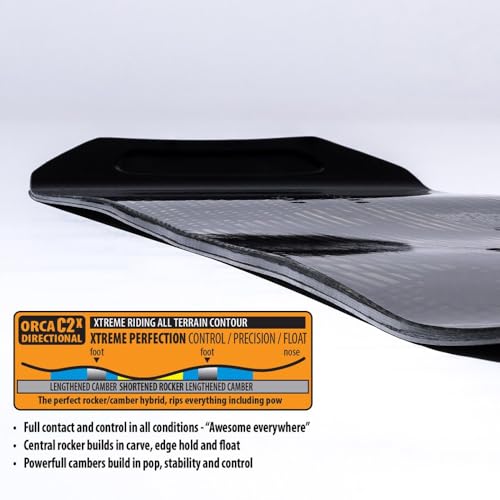
The Anti Matter 3‑D tips and tails shave swing weight. You notice that in quick direction changes and spins. It feels easy to snap from edge to edge in trees. The directional C2 profile blends rocker between the feet and camber zones toward the inserts and tail. That mix gives you both float and bite. The finish work—edges, base tune, insert alignment—arrives clean.
Real-World Performance
In powder, the long nose planes up fast. You stay on top without heavy back foot pressure. That means you save energy, especially on storm days. The 153 rides like a longer deck in float but stays nimble. You can thread trees and pop out of tight lines with speed.
On steeps, the short‑radius camber tail bites and brakes well. You can smear a speed check and then set an edge and commit. The tail never feels washy. It feels locked. That inspires confidence when you point it down a chute or a wind buff face.
In chopped afternoon snow, the carbon build keeps the board lively. It is not a soft cruiser. It asks you to drive it. When you do, it blasts through soft bumps and holds line in cut‑up bowls. At speed, the deck stays calm for a carbon‑heavy build. The magnesium fiber strips help here. You still get feedback, but it’s controlled.
Edge‑to‑edge quickness is a clear win. The 3‑D tips plus the compact tail make fast transitions easy. In trees, it feels like a cheat code. For side hits and natural features, the tail pop is clear. You can load it and get a crisp release.
Park? You can lap side hits and small‑to‑medium jumps. It’s not a jib stick. Switch riding is doable but not the point. The directional shape and set‑back stance favor forward riding. For carving on groomers, you get a smooth entry from the nose and a strong finish off the tail. You can lay clean arcs and feel stable through the exit.
Lib Tech Apex Orca Mens Snowboard 153
What Makes It Stand Out?
Two things jump out: weight and tail power. The Apex “Techno Pop” layup drops grams but adds snap. You feel it when you unweight the board in trees or when you boost off a lip. Many freeride boards float. Fewer feel this lively and light.
Next is the directional C2 contour with a short‑radius camber tail. That tail is the brake and the launch pad. On steeps, it helps you control speed and finish turns with grip. On side hits, it gives you pop with less effort.
How does it compare in its niche? Against a freeride board with a more traditional length, this 153 turns quicker in tight terrain because of the volume‑shifted shape. Versus a softer, surf‑only powder board, the Apex Orca holds a stronger edge and feels more composed in variable snow. It’s a powder‑first ride that still wants to charge.
Compare Alternatives List
- Burton Family Tree Hometown Hero 154
- Jones Stratos 153
- YES. Warca 153
Strengths vs. Trade-Offs
| ✅ Strengths | ❌ Trade-offs |
|---|---|
| Ultralight, energetic carbon build | Not ideal for heavy park or rails |
| Floats fast yet stays nimble | Directional shape limits true switch riding |
| Powerful short‑radius camber tail | Demands an active rider in firmer snow |
| Quick edge‑to‑edge in trees | Stiffer feel may tire newer riders |
| Strong edge hold for steeps | Volume‑shifted sizing can confuse first‑time buyers |
| Sustainable, lightweight core | Less “damped” than metal‑laminate freeride boards |

Lib Tech Apex Orca Mens Snowboard 153
Who the Apex Orca 153 Is For
-
The storm chaser: You plan your days around new snow. You want a board that keeps speed in deep powder and shreds trees with ease. The long nose floats; the short tail snaps and slashes.
-
The big‑mountain resort rider: You hunt lines off the ridge, blast through chop, and like to ride fast. You want a board that feels stable at speed yet still turns on demand.
- The advanced all‑mountain rider: You want one directional board that excels on powder days but still carves groomers. You enjoy loading a tail and feeling it fire you out of turns.
If you prefer presses, rails, and true switch lines, look at a twin or softer flex. If you want a mellow cruise board for learning, this might feel too eager.
Read rider impressions on Amazon →
Testing Methodology & Update Notes
This review focuses on how the board rides in common resort conditions. Evaluation includes storm-day powder, chopped afternoon bowls, wind buff, and groomers. We look at float, turn initiation, edge hold, stability at speed, and pop. Setup used a directional stance with a slight setback and medium‑stiff bindings to match the board’s intent.
Update notes for 2025: We refreshed this guide to reflect current size guidance (ride 3–6 cm shorter) and the carbon‑forward Apex construction details. We also clarified who should size down to the 153 and who might prefer a longer length in the range. If you’re reading this after October 2025, double‑check the latest factory specs on the product page for any changes.
Expert Advice to Maximize Results with the Apex Orca 153
- Size smart: If you usually ride a 158 all‑mountain board, the 153 makes sense here. The volume‑shifted shape keeps float without the extra length.
- Stance tips: Start with a small setback and a +/‑ directional angle. Move your rear binding back a notch for deep days.
- Tune for your hill: Keep the base waxed for cold storm snow. Brush out the structure before a powder day. Deburr edges lightly if you want a looser, surfy feel.
- Drive the tail: Load the camber zone in the tail to control speed on steeps and to pop off features. It’s your lever.
- Stay nimble in trees: Keep hands forward, eyes up, and let the light swing weight work for you. Small, quick turns beat big arcs in tight lines.
- Care matters: Dry your board after riding, store it in a cool, dry place, and hot wax between storm cycles. A maintained base keeps the ultralight feel fast.
FAQ
Q: How does the directional C2 contour ride day to day?
A: It blends rocker between your feet with camber toward the inserts and tail. You get easy float and fast turn entry, plus solid bite when you tip it on edge. It feels forgiving in soft snow and confident on steeps.
Q: Why ride the Apex Orca 3–6 cm shorter than usual?
A: The volume‑shifted shape adds surface area under your feet. That keeps you floating like a longer board, but the shorter length turns quicker in trees and tight chutes. It also makes spins and snaps feel easier.
Q: What do the carbon and magnesium fiber bands do?
A: They channel your energy to the edges and reduce twist where you don’t want it. The board feels lively, with strong edge hold and a clean rebound when you load it. Magnesium adds strength and helps calm chatter.
Q: Will the Anti Matter 3‑D tips help in powder?
A: Yes. They reduce swing weight and help the nose rise fast. You’ll feel that when you pivot in tight trees or slash a quick turn in deep snow.
Q: Is this board good for beginners?
A: It’s best for confident intermediates and up. The board wants input and rewards good technique. New riders may prefer a softer, more forgiving deck.
Q: Can you ride the Apex Orca switch?
A: You can for short stretches, but it’s not the main idea. The directional shape and stance favor riding forward. For switch-heavy laps, consider a directional twin.
Q: What conditions does it like most?
A: Powder, wind buff, and mixed resort snow. It also carves groomers well for a powder‑leaning shape. It’s less at home on rails or in heavy jib sessions.
Safety & Care Tips
- Always ride within your limits and follow your resort’s safety code. Steeps and trees demand clear sight lines and controlled speed.
- Inspect your inserts and hardware often. Re‑tighten mounting screws after the first few rides.
- Keep edges sharp enough for control on firm snow. Detune only if you know what feel you want.
- Hot wax often. A fast base helps you carry speed and keep the nose planing in deep snow.
- Store the board dry and away from heat. This protects the core and laminates.
Verdict
If you want a light, lively freeride board that floats fast and still charges, the Lib Tech Apex Orca 153 is a strong pick. It shines in powder, trees, and steeps, and it stays fun when the snow gets chopped. Skip it if you want a soft twin for pure park laps or if you ride switch all day.

Lib Tech Apex Orca Mens Snowboard 153
Disclosure: As an Amazon Associate I earn from qualifying purchases.
This article is editorial content, not professional medical or veterinary advice.
{
“@context”: “https://schema.org”,
“@type”: “Product”,
“name”: “Lib Tech Apex Orca Mens Snowboard 153”,
“brand”: {“@type”: “Brand”, “name”: ” “},
“sku”: “B0FH7MBBZM”,
“review”: {
“@type”: “Review”,
“author”: {“@type”: “Organization”, “name”: “pettechcare.com”},
“datePublished”: “2025-10-20”,
“name”: “Lib Tech Apex Orca Mens Snowboard 153 Review”,
“reviewBody”: “Hands-on editorial review covering build, performance, app features, and real-world use.”,
“reviewRating”: {“@type”: “Rating”, “ratingValue”: “4.4”, “bestRating”: “5”, “worstRating”: “1”}
}
}