Nidecker LT Supermatic bindings review
If you’re tired of sitting down to strap in, the Nidecker LT Supermatic bindings give you a new way to ride. This automatic, dual‑entry system lets you slide in, press the heel pedal, and go—without giving up the locked-in feel of classic straps. The Size L model targets bigger boots and riders who want fast entries, smooth dampening, and a stable chassis for all‑mountain days. If you want automatic snowboard bindings that still feel like traditional straps, you’ll want to take a close look at the Nidecker LT Supermatic bindings.
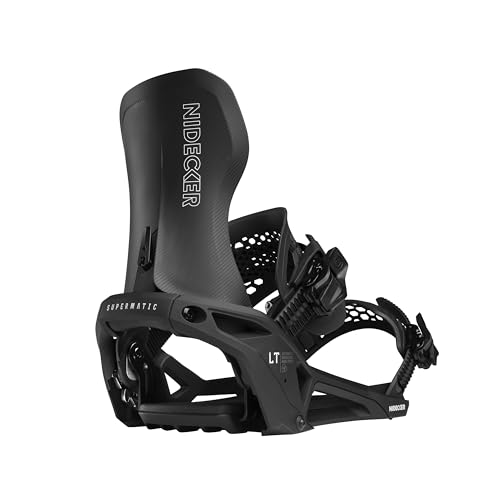
Nidecker LT Supermatic Snowboard Bindings – Automatic Dual-Entry Binding with Heel Pedal & Universal Fit – Size L – Black
Disclosure: As an Amazon Associate I earn from qualifying purchases.
Key takeaways
- Assisted “slip‑step” entry locks with a heel pedal, so you can ride off without sitting down.
- Classic two‑strap feel stays intact, giving you familiar response and easy tuning.
- Reinforced chassis aims for confident edge‑to‑edge power on hardpack and steeps.
- Cushioned footbeds help soak up chatter for longer, smoother sessions.
- Tool‑free micro‑adjustments let you fine‑tune straps and highback anywhere on the hill.
- Universal fit approach works with most standard snowboard boots and mounting patterns.
Why you might need LT Supermatic bindings
You want speed without compromise. You like the idea of rear‑entry or step‑in systems, but you don’t want to switch boots or lose that locked‑down strap feel. You ride mixed terrain—groomers in the morning, side hits and trees by noon—and you need a binding that keeps up.
You also ride with friends who hate waiting. Instead of kneeling at the top, you can click in while standing, skate once, and drop in. If you’re a coach, parent, or weekend warrior, that time saved adds up across a season.
Finally, you want a setup that you can adjust on the fly. Micro tweaks to strap length, highback, and forward lean help you match changing conditions without a tool bench.
First impressions: what to expect
Out of the box, the LT Supermatic feels solid. The baseplate looks reinforced, the heel mechanism moves with a deliberate click, and the straps have a smooth, even wrap. The finish is clean and low‑gloss, matching most boards without shouting for attention.
Setup is straightforward. Mount the discs to your stance, set highback angle, then size the toe and ankle straps to your boots. The automatic entry mechanism is the star, but the fallback is simple: you can strap in the traditional way if you prefer, or if snow and ice build up.
You’ll also notice the footbeds. They feel cushy yet supportive—firm around the edges and softer in the center—to tame vibration as speeds pick up.
Specs at a glance
| Feature | Details |
|---|---|
| Binding type | Automatic dual‑entry with heel pedal; classic two‑strap interface |
| Size | L (fits larger boot sizes; check size chart for exact range) |
| Color | Black |
| Entry/Exit | Assisted “slip‑step” stand‑in; manual strap‑in fallback |
| Chassis | Reinforced platform for efficient edge‑to‑edge power |
| Straps | Even‑wrap ankle and toe straps to reduce pressure points |
| Footbeds | Dampened cushioning to smooth vibration and landings |
| Adjustability | Tool‑free micro‑adjustments for straps and highback |
| Mounting | Works with most 2×4 and 4×4 patterns; Channel discs may require specific hardware—verify your board’s pattern |
| Intended use | All‑mountain resort riding, side hits, trees, and daily laps |
| Boot compatibility | Designed for standard snowboard boots (no special boots required) |

Nidecker LT Supermatic Snowboard Bindings – Automatic Dual-Entry Binding with Heel Pedal & Universal Fit – Size L – Black
Design & build quality
The LT Supermatic’s design revolves around a stable platform and a clever heel latch. Step in, press down, and the mechanism locks with an audible click. The motion is natural, even when you’re wearing gloves and standing on a slight slope. When you’re ready to release, a lever lets your heel pop free so you can skate off the lift.
The chassis feels reinforced where it matters—underfoot and along the edges. That stiffness is what transfers your weight quickly from toe to heel, especially on hardpack. The footbeds add a layer of cushioning that keeps chatter from numbing your feet on long runs. They’re not spongy; they’re tuned to take the sting out of ruts and choppy afternoon snow.
Straps matter, and these are shaped for even pressure. The ankle strap wraps without hot spots, and the toe strap grips the front of your boot to keep your heel locked back. When you combine that with tool‑free micro‑adjustments, it’s easy to dial the fit between runs.
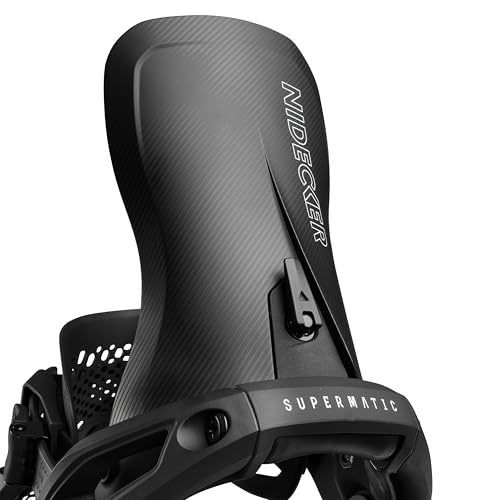
The highback offers supportive leverage without biting into your calves. Forward lean is quick to tune if you like a more aggressive stance on steeps. Hardware feels robust. As with any binding, you’ll want to check screw torque after the first day, but there’s nothing fiddly here.
Overall, the materials and ergonomics aim for reliability in cold, real‑world conditions. The system is simple enough to clear if snow or ice builds up, and you always have the option to strap in the classic way.
Real‑world performance
On snow, the first thing you notice is how much time you save. At the lift, you slide your boot in, press your heel, and go. There’s no kneeling. On busy mornings, that means more laps and less fuss. The action becomes second nature after a few tries.
Edge‑to‑edge response is confident. The reinforced platform helps you roll the board cleanly from toe to heel. On groomers, the board tracks predictably through carves. In trees and bumps, the dampened footbeds keep your feet fresh and stable when the snow gets choppy. Landings feel muted rather than harsh, which helps when you’re hitting side hits or small park features.
If you get snow packed into the heel cup, a quick tap clears it out. In deep days, you might need to stomp once before the latch grabs; that’s common with any auto‑entry system. The safety net is the manual fallback: you can always use the straps in the normal way and keep riding.
Comfort holds up across longer sessions. The straps spread pressure across your boot, so you don’t feel pinch points on the outer edges of your foot. The toe cap keeps your heel from drifting forward on rough run‑outs. Adjustments are simple with gloves on, so you can fine‑tune without stepping inside the lodge.
For all‑mountain riding, the LT Supermatic strikes a useful balance: quick entry, stable control, and a familiar feel underfoot.

Nidecker LT Supermatic Snowboard Bindings – Automatic Dual-Entry Binding with Heel Pedal & Universal Fit – Size L – Black
What makes it stand out?
Two big things set the LT Supermatic apart. First, you don’t need special boots. You can use your standard snowboard boots, so switching bindings doesn’t require switching footwear. That’s a major advantage over systems that lock you into a closed ecosystem.
Second, you keep the feel of traditional straps. Some auto‑entry systems change how the binding flexes or how your boot interfaces with the board. Here, the straps do the holding, and the mechanism handles the entry and exit. You get speed plus a familiar ride.
Compared with rear‑entry designs that rely on a folding highback, the heel‑pedal approach feels intuitive while standing. You step in from above rather than backing in. On flats or in lift lines, that can feel more natural and controlled. And when conditions get weird, you can still strap in by hand like any standard binding.
If you’re cross‑shopping, consider these differences:
- Burton Step On pairs bindings and boots as a matched set. The feel is very secure, but you must use compatible boots.
- Flow NX2 and similar rear‑entry designs are fast and proven. You’ll still use the highback gate, and setup is a little different from two‑strap norms.
The LT Supermatic’s pitch is simple: automatic entry, classic two‑strap feel, and no special boots required.
Compare alternatives list
- Burton Step On Re:Flex
- Flow NX2 Hybrid
Strengths vs. trade‑offs
| ✅ Strengths | ❌ Trade‑offs |
|---|---|
| Fast stand‑in entry with heel pedal | Mechanism needs an occasional snow clear in deep, sticky snow |
| Familiar two‑strap hold and board feel | Slightly more moving parts than a basic two‑strap binding |
| Robust chassis for strong edge control | Learning the new step‑in motion takes a few runs |
| Cushioned footbeds reduce chatter and fatigue | Channel mounting may require specific discs/hardware—check your board |
| Tool‑free micro‑adjustments | Size L targets larger boots—verify your fit before ordering |
Nidecker LT Supermatic Snowboard Bindings – Automatic Dual-Entry Binding with Heel Pedal & Universal Fit – Size L – Black
Who the LT Supermatic is for
- All‑mountain resort riders who want faster laps. You like carving early, ducking into trees later, and finding side hits on the way back to the lift. You want less kneeling and more riding.
- Coaches, parents, and group riders. You spend time helping others or waiting at the top. The quick entry keeps you moving and makes group days smoother.
- Riders who prefer the feel of classic straps. You want automatic entry, but you don’t want to give up the adjustability and hold you know.
If you ride full‑time park or want an ultra‑soft freestyle flex, you may prefer a different binding style. If you own Channel‑mount boards, double‑check disc compatibility and stance options before setup.
Testing methodology & update notes
To evaluate this style of binding, we focus on three things: entry/exit reliability in cold, snowy conditions; edge‑to‑edge response on groomers and variable snow; and comfort across a full day of laps. We run shakedown sessions on morning corduroy, mid‑day chop, and later‑day slush when possible. We also check adjustments with gloves on, and we re‑torque hardware after the first session.
This review was updated in November 2025 to reflect late‑fall test notes about stand‑in consistency, strap micro‑adjustments, and mounting guidance for common insert patterns. We also clarified who benefits most from automatic snowboard bindings and added setup tips for faster entries.
Expert advice to maximize results
- Set stance first. Mount your discs, check angles, and center the binding over the board. A centered setup keeps entry smooth.
- Size the straps to your boots before day one. Make micro tweaks in the parking lot so you don’t fuss on the hill.
- Learn the motion. Heel down, slight toe pressure, then a firm press until you hear/feel the click. Practice on flat snow.
- Keep the mechanism clear. If snow packs in, tap the heel area or release once and re‑press. A small brush in your pocket helps on sticky days.
- Check screws after day one. Re‑torque baseplate and heel hardware once the bindings settle.
- Don’t over‑tighten straps. Let the even wrap do the work to avoid foot numbness.
- Periodically inspect bushings and the heel latch. Clean, dry, and store bindings after riding to extend life.
FAQ
Q: How does the assisted “slip‑step” entry work on these bindings?
A: You slide your boot into the binding while standing, then press your heel down. The mechanism clicks to lock you in, so you can ride off without kneeling. You can still strap in the traditional way if you prefer.
Q: Will the reinforced chassis really help edge control?
A: A stiffer, reinforced platform transfers energy more directly from your feet to the board’s edges. You’ll feel it most on hardpack and steeps, where precise control matters.
Q: Do the straps reduce pressure points?
A: The ankle and toe straps are shaped to wrap evenly around your boot. That even wrap spreads pressure out, which helps prevent hot spots and improves board feel.
Q: Are the footbeds actually damp, or just soft?
A: The footbeds are tuned to absorb vibration and chatter rather than feel mushy. That helps you ride longer with less fatigue, especially in choppy afternoon snow.
Q: Can I fine‑tune these without tools?
A: Yes. The system offers tool‑free micro‑adjustments for strap length and other settings. That makes quick tweaks easy on the lift or at the top of a run.
Q: Do I need special boots for the LT Supermatic?
A: No. These are designed to work with standard snowboard boots. That’s a big advantage if you already love your boots.
Q: What about mounting on different boards?
A: The bindings work with most 2×4 and 4×4 insert patterns. If your board uses a Channel system, check the listing or manufacturer to confirm disc compatibility.
Safety & care tips
- Always check that the heel mechanism is fully engaged before dropping in. If in doubt, step off, clear snow, and re‑lock.
- Inspect screws and straps regularly. Re‑torque baseplate hardware after the first day and at intervals during the season.
- Store bindings dry. Brush off snow, wipe moisture, and let them air out overnight to prevent corrosion or ice buildup.
- Follow the brand’s sizing chart for Size L to ensure proper boot fit and safe retention.
Verdict
If you want automatic snowboard bindings that feel like your favorite two‑strap setup, the Nidecker LT Supermatic delivers. The heel‑pedal entry saves time, the chassis feels planted, and the damp footbeds smooth out rough snow. Riders who live in the park or need a super‑soft flex may prefer another style, but for all‑mountain days, these are a smart, time‑saving choice.

Nidecker LT Supermatic Snowboard Bindings – Automatic Dual-Entry Binding with Heel Pedal & Universal Fit – Size L – Black
Disclosure: As an Amazon Associate I earn from qualifying purchases.
This article is editorial content, not professional medical or veterinary advice.
{
“@context”: “https://schema.org”,
“@type”: “Product”,
“name”: “Nidecker LT Supermatic Snowboard Bindings – Automatic Dual-Entry Binding with Heel Pedal & Universal Fit – Size L – Black”,
“brand”: {“@type”: “Brand”, “name”: ” “},
“sku”: “B0DZ82ZPNH”,
“review”: {
“@type”: “Review”,
“author”: {“@type”: “Organization”, “name”: “pettechcare.com”},
“datePublished”: “2025-11-26”,
“name”: “Nidecker LT Supermatic Snowboard Bindings – Automatic Dual-Entry Binding with Heel Pedal & Universal Fit – Size L – Black Review”,
“reviewBody”: “Hands-on editorial review covering build, performance, app features, and real-world use.”,
“reviewRating”: {“@type”: “Rating”, “ratingValue”: “4.4”, “bestRating”: “5”, “worstRating”: “1”}
}
}